

Organic social media marketing is often neglected, with reach on major social media sites like Instagram declining for many brands, resulting in a 12% overall drop in platform reach last year. However, those who brush aside organic social marketing often do so because they are doing it wrong, whether that means using the wrong platforms or posting content that fails to engage their audience.
Social media is changing; marketers have to adapt to keep up, and if they do, they will build a really strong, trusting relationship with their audience. So, how do you stay ahead of the curve and make organic socials work in 2026?
What is organic social marketing?
Organic Social Marketing is a focus on posting, sharing, and creating content to promote, engage, and grow your audience using social media without the use of paid ads. Some of the most popular platforms include:
- YouTube
- Snapchat
- TikTok
- X (Twitter)
This is a huge growth from the original inception of what social media was, before marketing entered the chat. Social media was created in its original form in 1997 with a platform called SixDegrees, where members could create profiles and connect with friends.
The early to mid 2000s saw many of the social media platforms we all know and use today created, for example, Facebook in 2004 and YouTube in 2005. Social media quickly became a brand tool during its early growth, with major brands such as Coca-Cola and McDonald’s creating profiles on MySpace as early as 2002. Between 2006 and 2010, social media marketing became mainstream, especially with the rise of Twitter (now X) and YouTube.
The use of social media has shifted to now be used by brands to engage and promote their services or products. This has increased the use of paid advertising across socials. However, the cost of engagement and promotion has driven brands to focus on organic social that is predominantly centred around:
- The frequency of posting content without ad boosts
- Types of content shared to appeal to audiences and crack the algorithm
- Engaging with audiences by replying to comments, messages, and resharing of tagged posts
The benefits of organic social marketing
A lot of the talk regarding organic social marketing has been negative, and about the lack of reach; more light needs to be shed on the positive impacts organic social media marketing has, when done right.
According to the 2025 Social Media Marketing Industry Report, 83% of marketers said that their social media marketing gave more exposure to their business, with over 60% saying it generates leads and develops loyal fans, and over 50% saying it improved sales. Here are some of the main benefits of using organic social marketing :
- Increased awareness – Followers sharing and reposting your product increases awareness; you can also benefit from others posting about your company or product on social media.
- Community building – You can create a brand personality on social media, which the audience can connect to and feel a part of.
- Increases website traffic – Link placement in post captions, bios and stories can send viewers directly to the website, increasing traffic.
- Generates sales – Social media is a great way to inform and educate potential customers about the benefits of the products and services you offer, which can potentially lead to sales.
- Cost-effectiveness – One of the main benefits of organic social marketing is the lack of financial investment required; the primary cost is time, especially given the need to create even higher-quality content now.
- Builds trust – Posting authentic content increases a brand’s credibility and establishes its values.
How is Organic Social Media Changing?
Recently, there has been a lot of conversation about whether organic social media marketing is worth doing, with questions about how much value it actually provides for brands.
There’s been a shift in how users engage, and a noticeable drop in reach has led many brands to feel “shadow-banned.” Social media algorithms prioritise posts from friends and family, so they appear in your feed before brand and media content, significantly reducing visibility and engagement for marketing posts.
Another reason for the drop in reach for organic socials is the over-saturation of platforms such as Instagram and Facebook. So much content is being produced and published at all times, so without any sort of boost, it is very hard for your content to appear to a mass audience.
In the past, organic social marketing was all about quantity – getting content out as consistently as possible was key, and this may have led to lower-quality content as a result. That is no longer the case. Social media platforms now reward engaging content that gets shared and saved more, whilst being watched for longer.
Social media is all about building relationships with your audience now:
- Sound human and not overly corporate or like you’ve used AI to do your work.
- Branded content needs to be raw, authentic and stand out from the unoriginal, low-quality content that social media sites are filled with now.
- Audience members spend so much time interacting with content creators, so brands have had to adapt to appear as creators do.
Engaging Your Audience on New Social Channels
Whilst previously most engagement with social media came exclusively through public posts, comments, and likes, the rise of ‘dark social’ and social media bans for teenagers has changed the way brands approach social media marketing.
Dark social refers to untrackable website traffic from private channels such as direct messages and WhatsApp, and it has recently become an important aspect of social media engagement especially with the upcoming ban on social media use for under 16s in the UK – a ban already in place for countries like Australia.
Private groups and community chats are being used as a more personal and trusted way for brands to communicate with their audiences. According to Forbes, it’s estimated that up to 84% of all online sharing activity occurs on dark social networks.
Content creator collabs have been another strong marketing method for organic socials, and one that is becoming increasingly popular. Working with a big creator builds trust in the brand amongst their audience and makes your product seem desirable to them.
For the best results, brands will look for a creator whose target audience is similar to theirs, which is much more important than simply choosing a creator with the highest follower count. Often, with organic collaborations, the brand must promote the creator by sharing their content.
Reddit has become a really effective and useful tool for organic social marketing, with subreddits allowing brands to target a particular niche where audience members actively seek solutions to problems your brand solves. For example, if your brand is in fitness, you could join a fitness subreddit and share your expertise to help your audience.
Live Streams are a strong, authentic way to build a connection with your audience and create genuine content. It creates a perfect platform to share your expertise with the audience, who can ask questions and receive answers instantly, as well as to show off your product authentically. There are a number of platforms where you can go live, including Instagram, YouTube, TikTok and Twitch.
What social media platforms should I use for marketing?
There are benefits to using every social media platform to market your product; some are generally better than others. It can depend on what you’re selling and the audience you want to attract. For example, if you are trying to attract a younger audience, TikTok may be more suitable than Facebook.
How you engage on platforms matters as well. For example, the length of your content often depends on the platform; however, on platforms such as YouTube and LinkedIn, a 40-60% watch time is considered solid, with 70% and above considered really strong.
Of course, you’d expect shorter videos to average at a higher watch time, so with the importance of retention, making shorter and more captivating videos is key, ideally between 15 and 30 seconds, but this is obviously dependent, as there are times when a longer advert is more suitable. Follower count matters much less than it did.
TikTok
With the highest engagement of any social platform and an algorithm that favours content with higher engagement and shows it to new users, TikTok has become the best place for organic social marketing over the past couple of years, especially for products targeting a ‘Gen Z’ audience. Some top tips to pay attention to:
- Capitalise on trending topics and audio.
- Use specific hashtags
- Post consistently, 1-3 good quality posts per day
Whilst still very effective, Instagram posts have had a decline in reach in recent years. However, the ‘Reels’ section means it is still a platform that is fantastic for organic social marketing in similar ways to TikTok. Every brand on social media should be using Instagram. Here are some tips to stay relevant:
- Stay on top of trends, especially on Reels
- Be active on stories
- Interact with audience comments
Posting content of value to the audience is really rewarding on LinkedIn, with posts that create engagement and interaction very likely to be seen by a larger audience. You are marketing to a professional audience, and especially if you’re using B2B marketing, you are reaching the right people with purchasing power.
LinkedIn is really useful if your brand requires a more professional tone, and remember:
- Post longer, written pieces of content which provide insight into what you can offer to companies
- Comment, share and engage with other people’s content
- Build your connections. The more connections you have, the more reach you’ll get
One of the largest active and diverse user bases of any social media platform, particularly for reaching a slightly older demographic. The algorithm promotes meaningful interactions, meaning when creating content for the platform, you should remember to:
- Create content encouraging audiences to comment, share and spark discussion
- Use Facebook groups to build a strong and engaged community, creating a connection between the brand and consumer
- Use a variety of content forms, including photos, stories and videos
- Share and engage with user-generated content
X (Twitter)
The home of fast-moving, real-time conversation as things happen. Audience interaction is the key on X, as it is a platform where users share opinions and thoughts, especially on current events. When marketing on X, it is important to:
- Join in on relevant conversations
- Engage with followers
- Use hashtags to improve discoverability
- Post very frequently, multiple times a day
Most important metrics to measure in Organic Social Media
When it comes to measuring social media metrics, we can split them into different categories. You should be focusing on the metrics that align best with the goals you set in your marketing strategy; all are useful indicators that your post has effectively increased or engaged your audience. These are the most important measurements:
- Engagement – Likes, comments, shares, etc. As we’ve mentioned, engagement is becoming increasingly important as content which produces high engagement gets pushed more by algorithms, therefore gaining more reach. Strong engagement rates also suggest your
- Growth – Increase in followers, a simple way to measure the success of your social media marketing efforts.
- Conversions – Click-through rate from CTA’s, how many viewers made the desired action after seeing the post. It is unrealistic to expect a lot of sales directly from organic social posts, but if viewers are clicking to find out more, it shows they are interested in what you are promoting.
Brands using organic social media successfully
Plenty of brands have created really strong and recognisable profiles online, with a range of approaches that showcase the benefits of being creative and thinking outside the box. The brands below are ones we see on social media consistently, and this online presence puts them at the forefront of your mind when deciding who to purchase from in their particular industry.
Ryanair
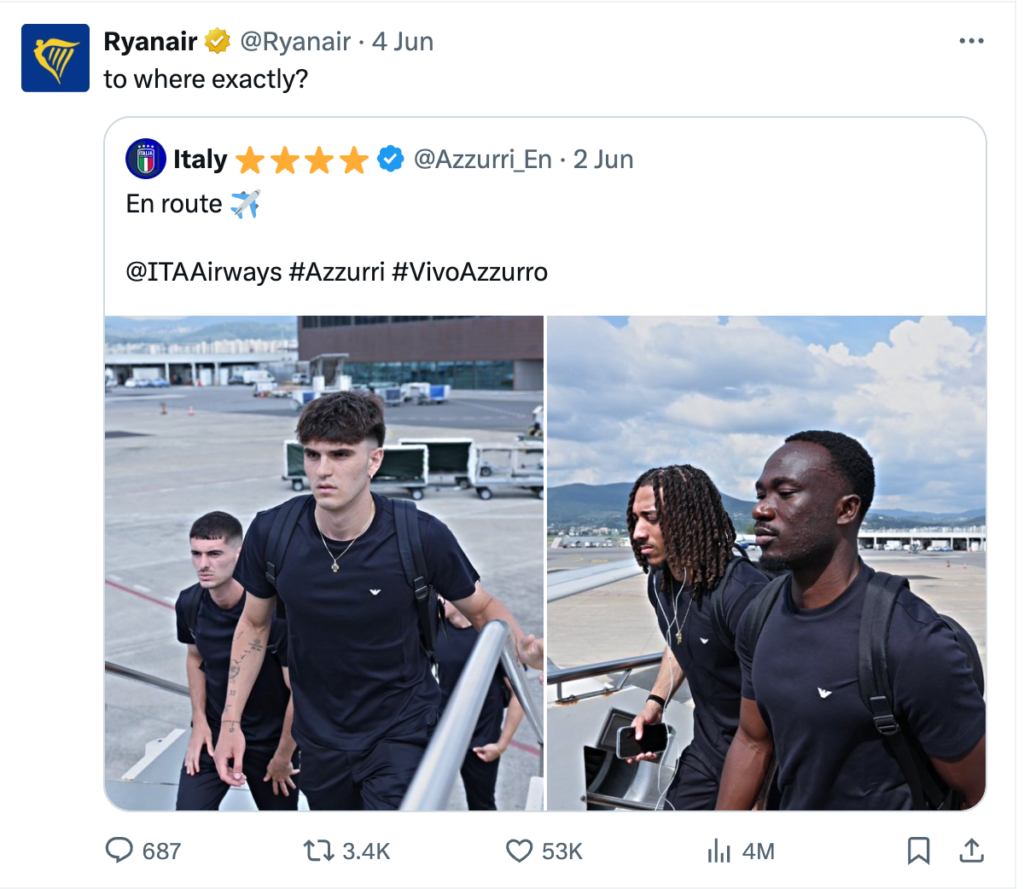
Ryanair is one of the best examples of a brand that has created a really strong presence on social media through authenticity. When you think of flying with Ryanair, you think of very cheap flights, little leg room and constant additional baggage charges, and they are aware of this.
Their content is very self-aware, using their flaws to add comedic value. The message being, what do you expect when you’re paying so little for your flights?
Ryanair are also very quick to add their own input to viral social media trends and, when they can, to major online conversations. For example, after the Coldplay kiss cam incident, they added a post saying they ‘love to split people up as well’. This is a perfect example of the self-deprecating humour that has become so popular and successful for Ryanair.
Patagonia
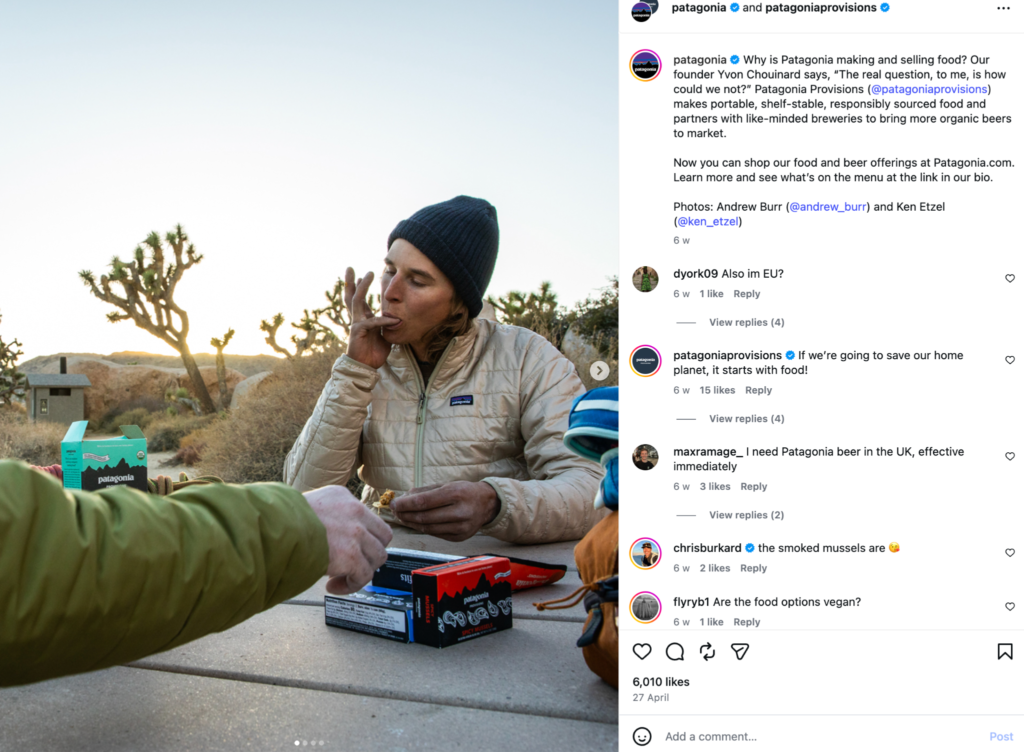
In different ways from Ryanair, Patagonia has also created a strong and memorable brand image on social media, which engages the audience incredibly well.
Patagonia uses UGC (user-generated content) featuring photographs taken by consumers, which works very well for both parties, as it provides stunning imagery that showcases their outdoor clothing in its natural habitat. Users whose photos are posted feel appreciated and connected to the brand.
GymShark
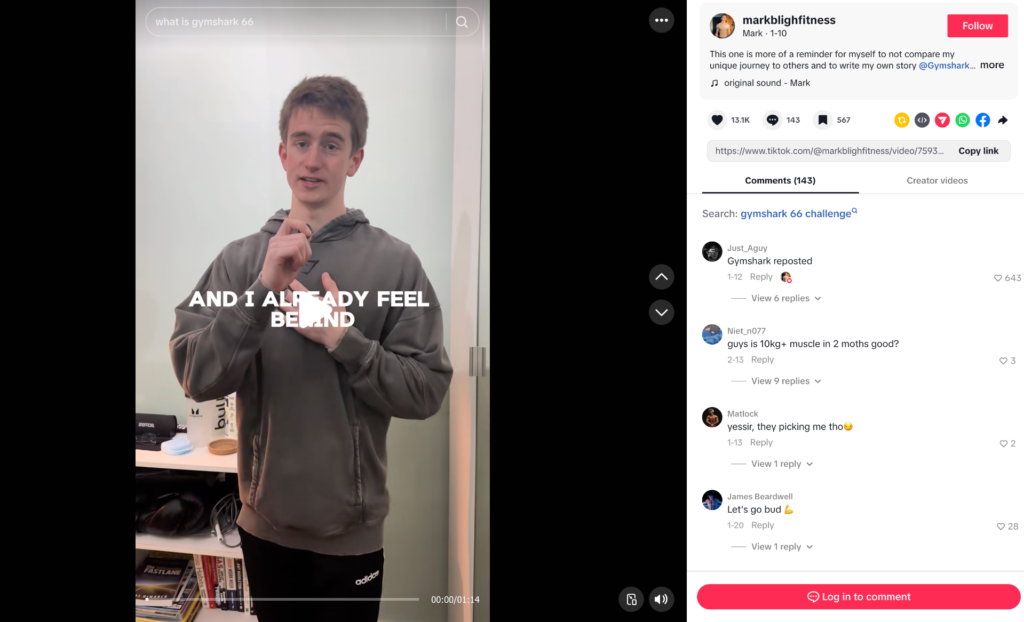
GymShark partnered with popular health and fitness influencers such as Jeff Nippard and Sam Sulek to promote their product to the intended audience, as these creators share a similar target audience with the creators they work with.
As with most brands succeeding in organic social marketing, GymShark have a large following on TikTok due to sharing relatable and funny content. The #Gymshark66challenge was a really successful campaign, which encouraged people to go on a 66-day fitness journey and show the progress they made in this time.
This hashtag got over 700k views and portrays the brand as positively impacting the lives of the consumers, who are becoming healthier and more motivated.
Organic vs paid social
Many marketing companies are scrapping organic marketing and putting all their social budgets into paid. There are many benefits to paid social marketing, such as the immediate visibility it brings; it should be used alongside organic, as they both achieve different goals.
Paid social is all about reach; it places your posts in front of your audience, allowing you to target specific demographics and, ideally, to drive direct conversions instantly. Organic social is a longer-term approach to building relationships with your audience, creating trust and associating your brand with the identity you build over months of posts, stories, and comments. It is a much longer process, whereas paid offers instant results.
Using paid and organic social marketing together can be highly effective, combining the instant reach of paid with the long-term trust that comes from consistent organic posts to create a strong brand presence.
You can also use organic analytics to maximise your paid results. Posts that achieve high organic engagement rates can be boosted to help maximise the already high numbers. You can see what works and just as important, what doesn’t work on whatever platforms you are marketing on before putting money into it. For example, if you try a new content format on Instagram Reels and it produces low engagement, you know not to use it for paid ads.
Finding an agency for your social media marketing
If you combine high-quality paid social marketing with consistent, high-quality organic content, you will build a really strong online presence, build trust and a relationship with your audience, and gain website traction and conversions.
Building this presence and combining the two forms of social media marketing can be challenging and time-consuming, but you don’t have to do it alone. Get in contact with our Mission Control, and we can deep dive using data to check for a free audit to see which platforms you are going to see success on and come up with the strategy to make that success a reality.